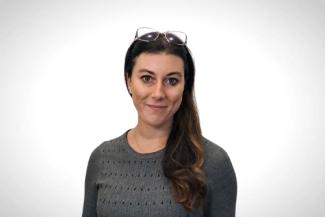
Marina Covolan is a classical archaeologist, specialised in Roman architecture. Her work concerns the Campania region, particularly the cities and territory of Abellinum, Pompeii and Cumae. Marina's work deeply links archaeological methodologies with environmental sciences (e.g., geomorphology, geology, archaeoseismology).
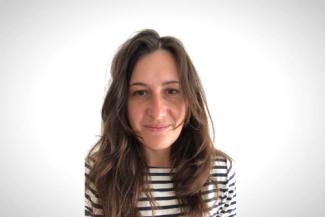
Radka Koncitikova’s first interest was the structural biology of plant hormones in relation to biotic stresses (Ph.D. Plant biochemistry, Palacky University Olomouc, Czechia). During her post-doc in Marseille, she discovered the fungal phytopathogens universe (ISM2-CNRS lab). In collaboration with (BBF-INRAE Lab), she decided to study protein-protein interactions related to pathogenicity. Radka is currently a Research Scientist (Chargé de recherche) at the French Research Institute for Agriculture, Food and the Environment (INRAE), Jean-Pierre Bourgin Institute, at the Dynamics and Structure of Lipid Bodies team.
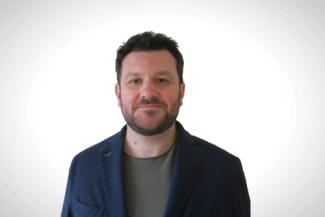
Saimir Shpuza is a classical archaeologist working on the ancient territory of Illyria. His CIVIS3i project on the Nymphaion of Apollonia and the Bitumen in the Mediterranean combines interdisciplinary approaches such as: landscape and religious archaeology, ancient mining techniques, and environmental studies. Saimir has been the scientific consultant of a series of historical and cultural documentaries prepared by Sandstone Productions and the BBC named Treasures of Albania.
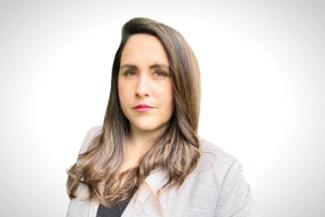
Yael Dansac holds a PhD in Social Anthropology and Ethnology by the EHESS Paris and co-edited the book “Relating with More-than-Humans. Interbeing Rituality in a Living World” (Springer, 2022). Under CIVIS3i, she studied ritual creativity and ritual design in alternative spiritual practices held at megalithic sites. Yael is currently a Scientific Collaborator at the Interdisciplinary Centre for the Study of Religions and Secularism (CIERL) at the Université Libre de Bruxelles.
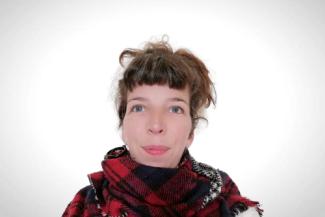
Armelle Girinon studies Italian history and literature (19th and 20th-century). Her doctoral research focused on travel narratives and on the apprehension and construction of otherness. During her CIVIS3i appointment, she worked on the oral history of peasant women and on the writing of their life stories. Armelle is currently an Assistant Professor, lifetime civil servant, at the University of Grenoble, France.
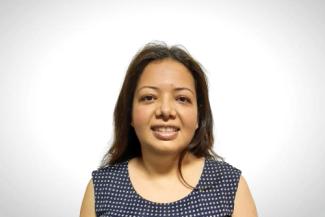
Susanne Abou Ghaida has a PhD in Education from the University of Glasgow, and specializes in Arabic children's and adolescent literature. Her current research is on the Al-Shayateen Al-13 (The 13 Devils), the Arab espionage fiction series for adolescents published between 1974 and 2008. After her fellowship, she publishes a chapter book by Taylor and Francis.
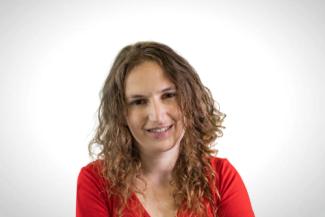
Anael Ben-Asher worked as a postdoctoral researcher at the Condensed Matter Physics Center, Autonomous University of Madrid, under CIVIS3i. She obtained her Ph.D. from the Technion in Haifa, Israel in 2021. Her research interests are non-Hermitian formalism of quantum mechanics, quantum light-matter interactions, and molecular physics. She is currently a Senior Lecturer at Tel Aviv University, Israel.
Anna Delle Foglie is an art historian specialising in 15th century Italian art. She obtained her PhD from Sapienza Università di Roma. Her research focuses on Late Gothic painting in Lombardy and Naples, the Early Renaissance, model book drawings and the history of illumination.
Marina Covolan is a classical archaeologist, specialised in Roman architecture. Her work concerns the Campania region, particularly the cities and territory of Abellinum, Pompeii and Cumae. Marina's work deeply links archaeological methodologies with environmental sciences (e.g., geomorphology, geology, archaeoseismology). Marina is currently an associate researcher at the Center Camille Julien in Marseille.
Felipe Zapata Abellán holds a PhD in Theoretical Chemistry from Sorbonne Université, France (2019). After his postdoctoral stay at Lund University, Sweden (2019-2022), his current research is focused on molecular core-level photoionization timedelays explored by two-photon interferometric techniques. Felipe is now Associated Professor at the Complutense University of Madrid and was awarded with the grant Ayudas a Proyectos de I+D de Doctores Emergentes.
Sadia Agsous-Bienstein is a researcher in cultural studies with a focus on the Arab world, Israel, and Arab-Jewish relations. Her research at Université libre de Bruxelles focused on the engagement of Arab intellectuals active in the cultural field against antisemitism. She is curently an Associate Professor at the Sorbonne Nouvelle in Paris.
María Jesús Cabrera Afonso started to study new photoredox transformation to access new chemical space, and she is currently interested in the possible application of nanoparticles in this field. She currently has a research position at Altenea Biotech from Fundacion UAM.
Manuel López Forjas holds a Ph.D. in Hispanic Studies from the Universidad Autónoma de Madrid, where he has been a postdoctoral researcher (2020-2022). His specializes on Spanish and Latin American philosophical and cultural thought, literature, and history. He has been recognized as a member of the National Research System (SNI), Level I, of the Mexican Government for the period 2023-2027.
Barış A.Yörümez is a historian of socialist movements in the twentieth century. His post-doctoral research focuses on the “socio-emotions” history of democratic socialist movements that emerged across the countries of East-Central Europe and the Global South between 1956 and 1980
Pol Sopeña has devoted his research to laser processing methods. During his doctorate in the University of Barcelona he worked on laser-induced forward transfer for printed electronics applications to later focus his post-doc on ultrafast laser micromachining in the laboratory LP3 (AMU/CNRS). He is currently a permanent researcher at the National Research Center (CNRS), and is based in the Lasers, Plasmas and Photonic Processes team (LP3) in France.
Armand Bernou was a postdoctoral researcher at Sapienza Università di Roma, Italy. His research focuses on understanding the influence of microscopic structures on macroscopic behaviors in mathematical models for physics and biology. Armand is now an Associate Professor (Maitre de conférences) at the Université Lyon 1 in France.
ruben_st_bg_lighter_500x334dpi
Rubén Seoane Souto is a researcher on condensed matter physics. His research objectives are to understand the new physical phenomena emerging at the nanoscale and to design quantum devices for applications. Following his CIVIS3i appointment, Rubén obtained a competitive Madrid Talent Attraction fellowship to set up his own lab. He is currently a Junior Group Leader for the Theory of Quantum Materials and Solid State group, at the Quantum Technologies Department, Instituto de Ciencia de Materiales de Madrid, CSIC, Spain.

Christian Mazet is a classical archaeologist, historian of archaeology and specialist in the reception of antiquity. During his CIVIS3i postdoctoral appointment at the Université Libre de Bruxelles, his major aim was to reassess southern Etruscan material culture into the broader Mediterranean exchange networks during the Archaic and Classical periods. Christian is currently Curator for Cultures of Italy and Western Mediterranean at the Department Greece and Rome of The British Museum.
Ahmad Allahbakhsh received his Ph.D. in Polymer Engineering from Tabrbiat Modares University. He was a Fellow at the Université libre de Bruxelles' BioMatter research unit, where he worked on the development of graphene quantum dots-based engineered living biomaterials. He is currently an Associate Professor of Polymer Engineering, Head of the Department of Polymer Engineering, and leads the Living Materials Research Group, at the Hakim Sabzevari University (HSU) in Iran.
As a political anthropologist, Elena Capello uses ethnographic research to analyse emerging political issues in Europe: Activism, public participation and the redefinition of citizenship, eco-socialist movements and the environment, and political relationships with the land. Her latest research focuses on local opposition to European public policies about ecological transitions and local demands for energy democracy.
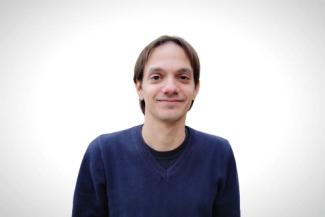
Edouardos Loukopoulos is an inorganic chemist. During his CIVIS3i postdoctoral appointment at the Autonomous University of Madrid, Edouardos focused on the development and application of chemically tailored porous materials for the optimal capture of persistent anthropogenic water pollutants. He is now a César Nombela Fellow / Atracción de Talento Programme, Institute of Catalysis and Petrochemistry (ICP-CSIC), in Spain.
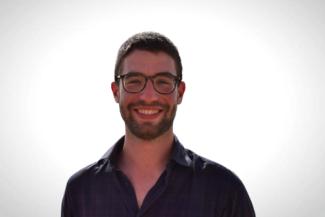
Luca Volpi is an archaeologist of Western Asia specialised in material culture studies, with active collaborations in Iraq, Türkiye, and in the Kurdistan Region of Iraq. Luca holds a Ph.D. from Sapienza Università di Roma. His CIVIS3i project focused on the conservation and restoration practices of archaeological earthen architectures in Western Asia. Luca is currently an Honorary Professor at Universidad Autonoma de Madrid, Department of Ancient History, Medieval and Paleography and Diplomatic History, in Spain.
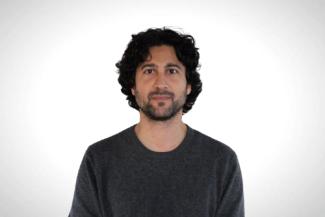
Giustino De Michele holds a PhD in Philosophy. After devoting his doctoral dissertation to the problem of animality in the thought of deconstruction, in CIVIS3i he explored the articulation of deconstruction, economy, and economics.
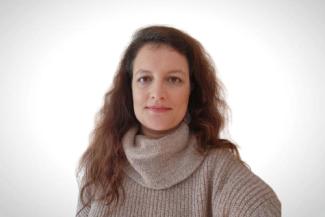
Andreia Rodrigues holds a PhD in Ecotoxicology and Environmental Biology and has been researching aquatic organisms' response to stress. Her postdoc at Aix Marseille University focused on mercury-selenium interactions in hydrothermal vent marine life, merging biogeochemistry and biology for food safety insights. Andreia is currently Assistant Researcher (Investigadora Auxiliar) at the Centre for Environmental and Marine Studies (CESAM) and the Biology Departament of the University of Aveiro, Portugal.
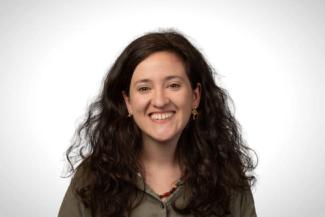
Elia Romera-Figueroa, Ph.D. (Duke University), is currently an Assistant Professor at Universidad Complutense de Madrid. Previously, she was a CIVIS3i Marie Skłodowska-Curie Postdoctoral Fellow at Universidad Autónoma de Madrid and the University of Glasgow. She specializes in 20th- and 21st-century Iberian cultural studies. Her research examines the interplay of music and literature with gender, sexuality, memory, and social movements, with particular attention to music's role in late Francoism and Spain's Transition to Democracy. Her work also engages global Latinx and diaspora cultural studies in Spain, as well as the relationship between education, migration, and cultural belonging.
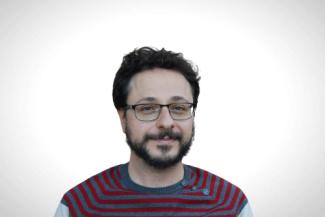
Antonio Michele Miti is a mathematician working on symplectic geometry and higher structures. His postdoctoral project focused on the notion of observable quantities in multisymplectic geometry, investigating applications to the study of symmetries of Lagrangian field theories and their numerical integration. Currently Antonio is visiting scientist at the Institut Camille Jordan in Lyon, France, funded by the selective grant from Sapienza University of Rome Avvio alla Ricerca.
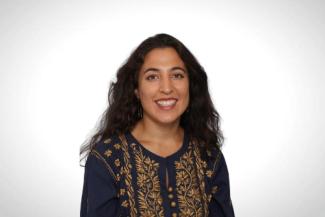
Ruth H. Tichauer holds a Ph.D. in Computational Structural Biology, Paul Sabatier University, France (2019). Ruth then joined the Jyväskylä University, Finland, to work on light-matter interactions at the atomic scale. Her research focusses on the development of computational methods to investigate organic materials’ properties when subjected to electromagnetic fields.
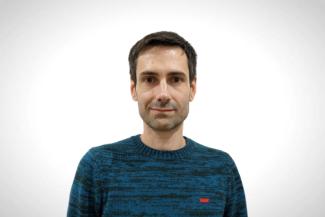
Davide Reato has a background in biomedical engineering and neuroscience, thanks to his previous work in the US and Portugal. His current research goal is to elucidate the mechanisms by which electricity can be used to alter brain activity.
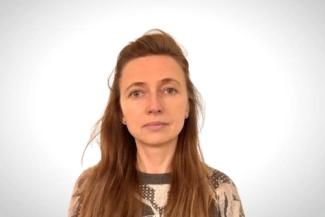
Daria Dyakonova is a social historian. She obtained her Ph.D. from the University of Montreal, Canada. Her research focuses on the international Communist Women's Movement during the interwar period of the 20th century. During her CIVIS3i postdoc she was hosted by the Department of History, Cultures, Religions and Performing Arts at Sapienza Universita di Roma, Italy. Daria is currently a Faculty member at the Department of International Relations of the International Institute, Geneva (IIG).

Houman Alimoradi, with a master’s in medical toxicology and a PhD in pharmacology and toxicology, focuses on nitric oxide (NO) modulation in disease conditions. His research involves developing novel nitric oxide donors to enhance NO function in cardiovascular diseases and nitric oxide synthase inhibitors to reduce excessive NO levels in disorders like inflammation and cancer. Through this work, he aims to improve treatment strategies by targeting nitric oxide regulation in various pathophysiological conditions.
Houman Alimoradi, with a master’s in medical toxicology and a PhD in pharmacology and toxicology, researches nitric oxide (NO) modulation in diseases. He develops novel NO donors to enhance cardiovascular health and inhibitors to reduce excessive NO in conditions like inflammation and cancer, aiming to improve treatment strategies through NO regulation.
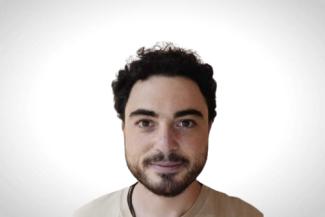
Gonzalo Oteo García is an archaeogeneticist that uses ancient DNA to study the past. His research is focused towards understanding how populations change over time, how they relate to the world we see today or why they went extinct.
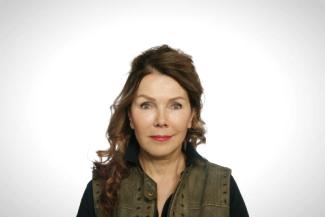
Ana Dević is a historical-cultural sociologist who obtained her PhD from the University of California at San Diego; serves as an adjunct professor at the University of Bologna. At Aix-Marseille she researches alternative/artistic commemorations of collective violence in comparative perspectives.
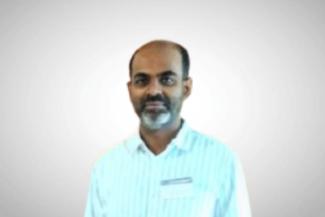
Sumesh Sasidharan is a biomedical engineer and researcher specializing in computational cardiology and inflammation modeling. His current research focuses on developing patient-specific poroelastic models to understand the mechanical and immunological dynamics of acute myocarditis, with the broader aim of informing personalized diagnostic and therapeutic strategies.